
Motions of Reciprocity: Dogwood Blossoms Village 3–5 Program
By the Dogwood Blossoms (Village 3–5) Educators
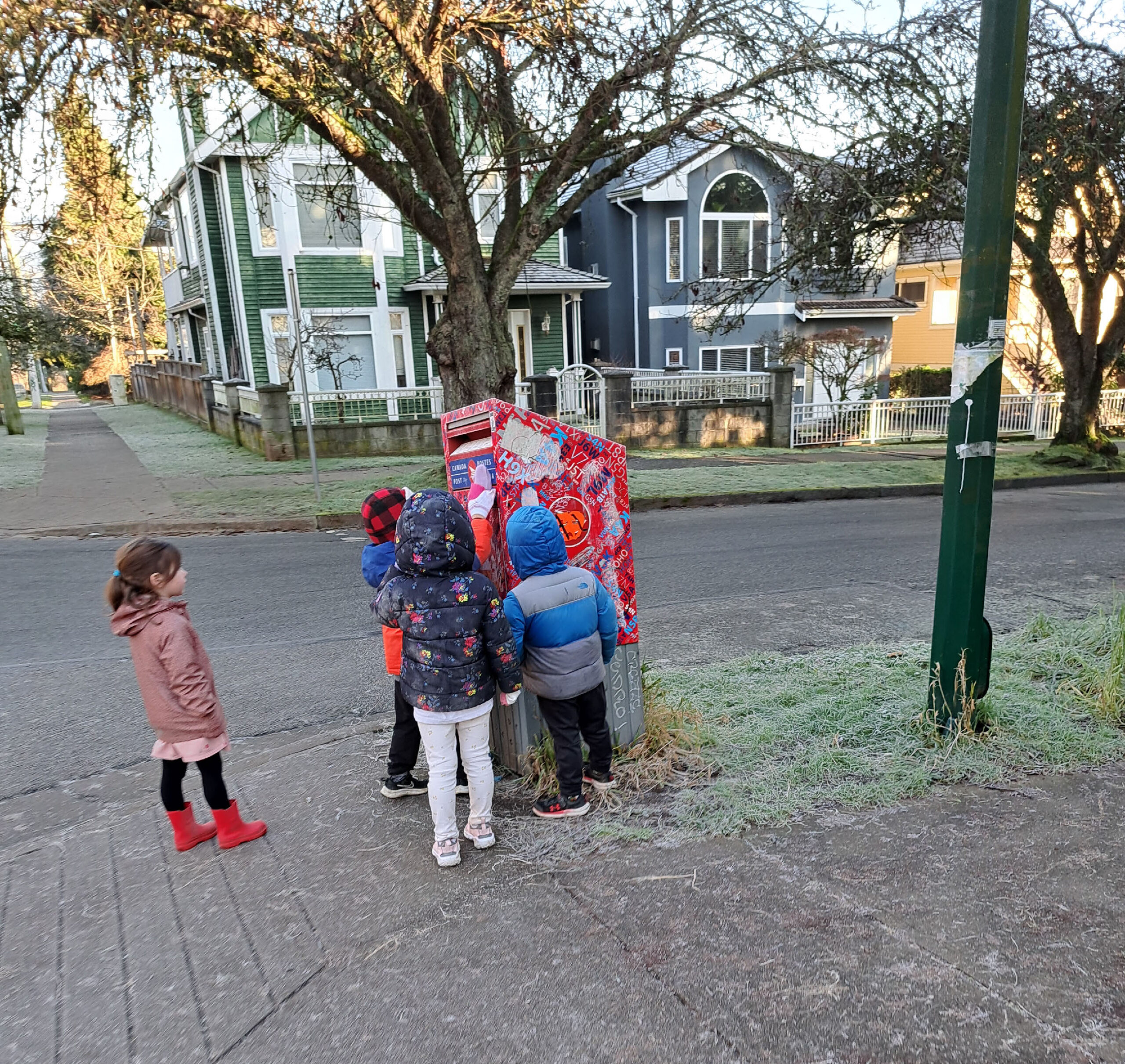 On one of our many walks we came across a letter box.
Quincey: Who should we send a surprise letter to?
Taylor was the one they chose. We had made the letter, had it all ready to go and were off to the letter box.
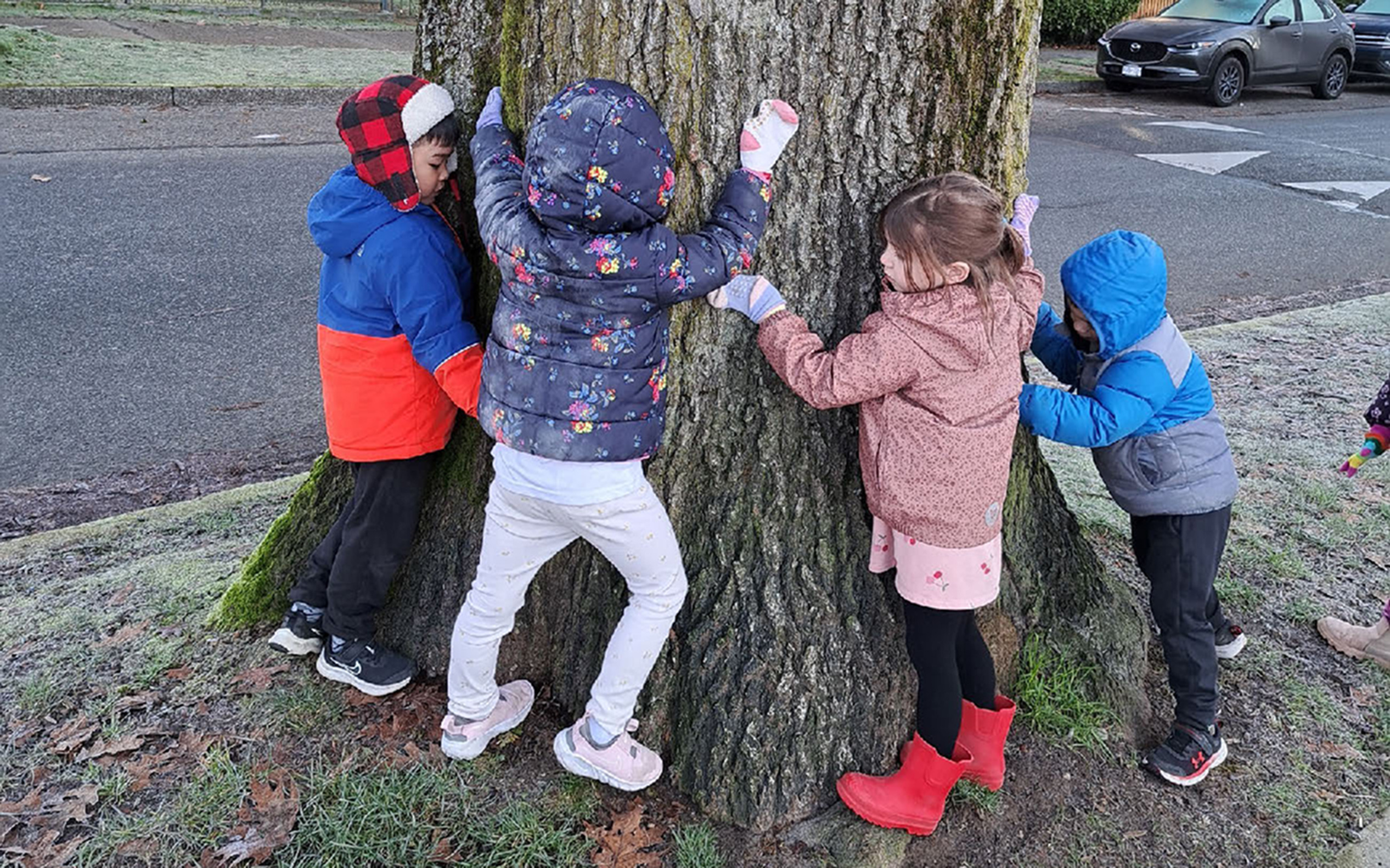
On our way to the mailbox, we passed one of the large Oak trees on the North side of the school. Aria ran up to the tree and spread her arms as wide as she could, and others joined.
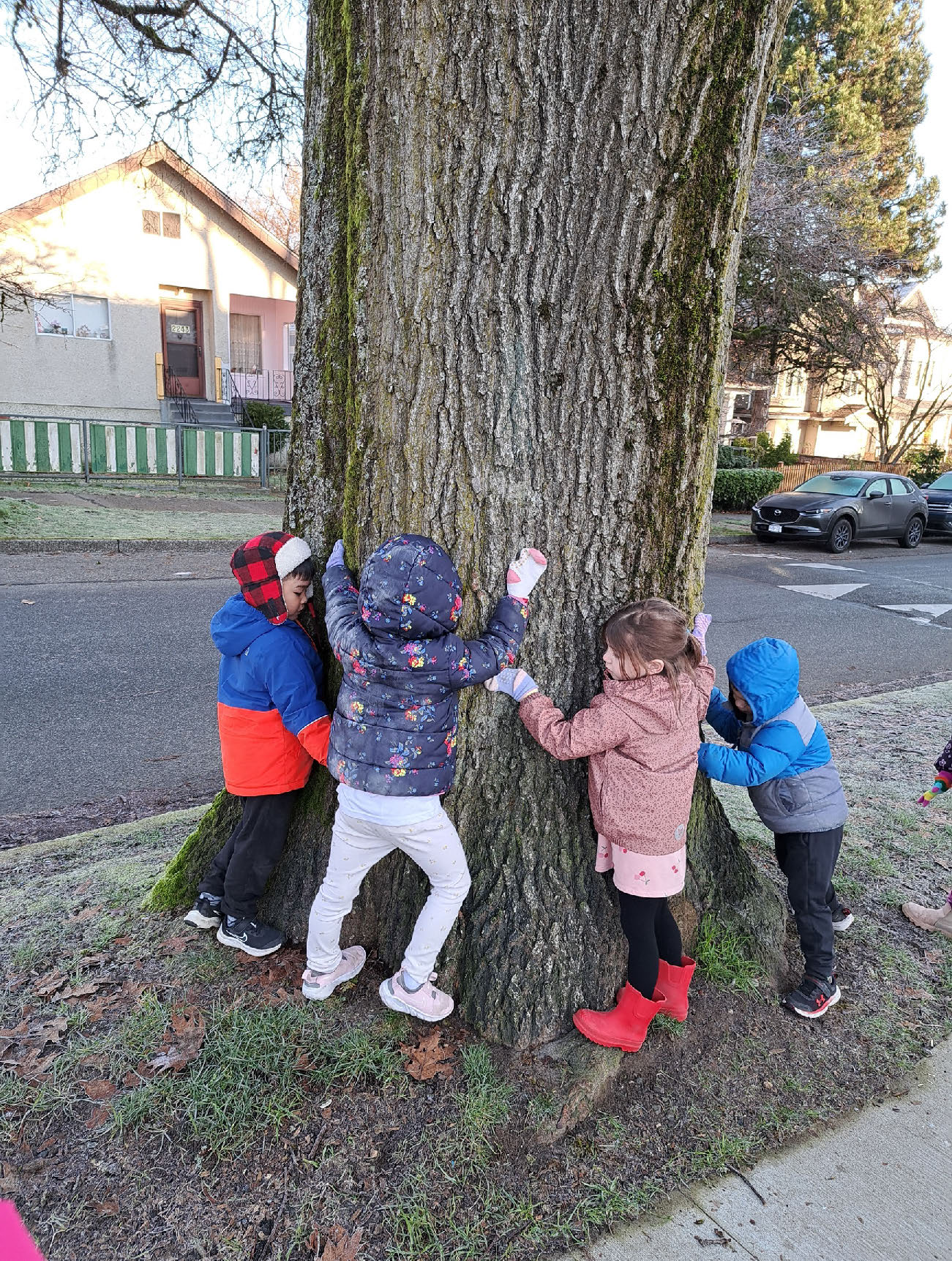
Aria: We are giving the tree medicine.
Leading up to this scene, we found discarded Christmas trees around the neighbourhood a few weeks prior. We brought them back to our play yard and we noticed the pleasant aroma of the pine needles (each tree had its own scent – similar but not the same).
The children came up with the idea to use the pine needles as medicine for medicine pouches.
The talk about medicines reminded the children how Norm taught the educators about using Cedar bows as medicine to brush off our bodies to bring healing.
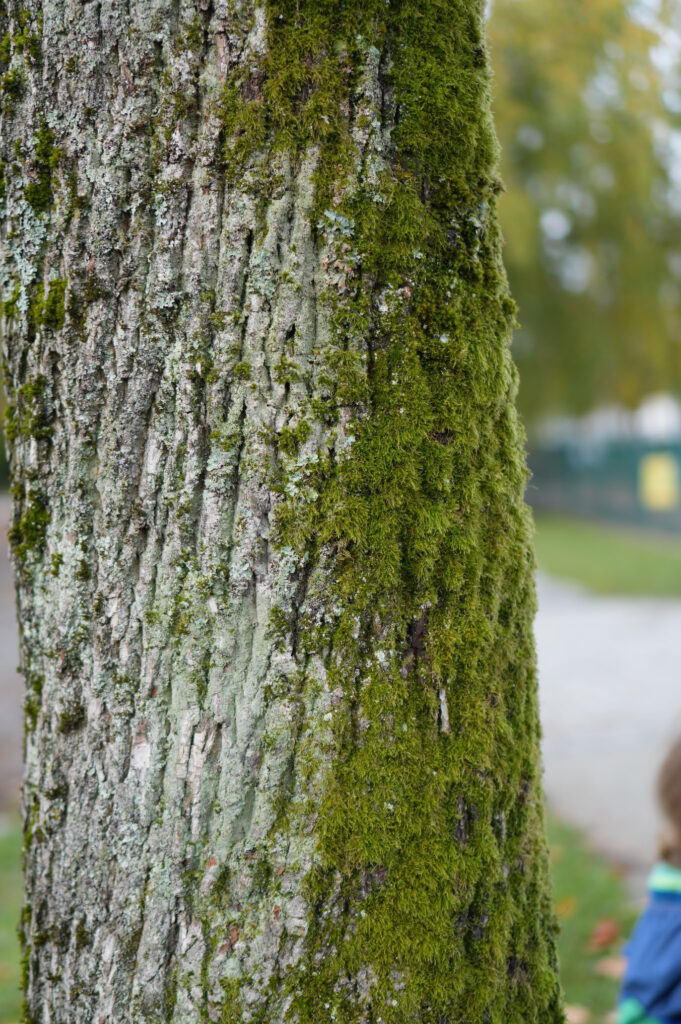
Mario reminded us that Martin is a Cedar tree. In an act of reciprocity, we gifted Martin some of our found Christmas tree boughs in exchange for Martin's Cedar bow so we could add to our medicines in the class.
 motions of reciprocity
In our encounters with Martin, Bob, and all their other tree friends in the neighbourhood, we exchange many conversations, gifts, and medicine. This moment where Aria, Nolan, Emerson, and Theo reach their arms across the tree becomes a significant moment of reflection.
Rather than any verbal, written, or other symbolic forms of connection to this tree, the children’s reach is a bodily reciprocation to the tree. Yet this motion of reciprocity is not only a simple 'act of kindness'. I am reminded of Sharon Todd’s (2022) claim that “bodily encounters enact certain educational relations” (p. 738). In other words, our bodily form is closely linked to how we can relate to others, and what kinds of relations we have with them.
In this moment, the hugs are an act of not only of receiving but giving. In the motion of arms spreading wide and the opening of oneself to others, there is a shift in our stance away from the self and outwards toward others. The warmth and energies that are released from our bodies, perhaps, can be medicine for the trees as the children claim.
The thought that our bodies carry medicine is incredibly fascinating. One dominant way of relating to and knowing medicine revolves around the colonial logics of extraction and taking away from the land, which the children’s claim disrupts to the core.
And so my curiosity grows:
what kinds medicine can our bodies offer to others, to the land?