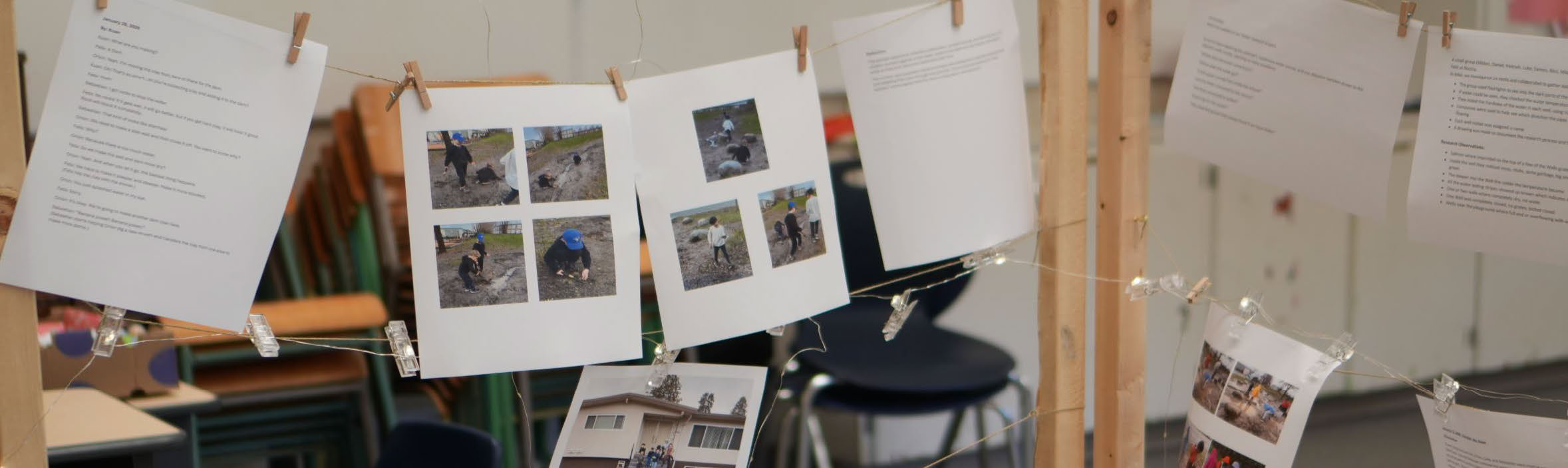
Mone Mone Book: When Documentation Becomes Meaningful
By the Village Infants Educators
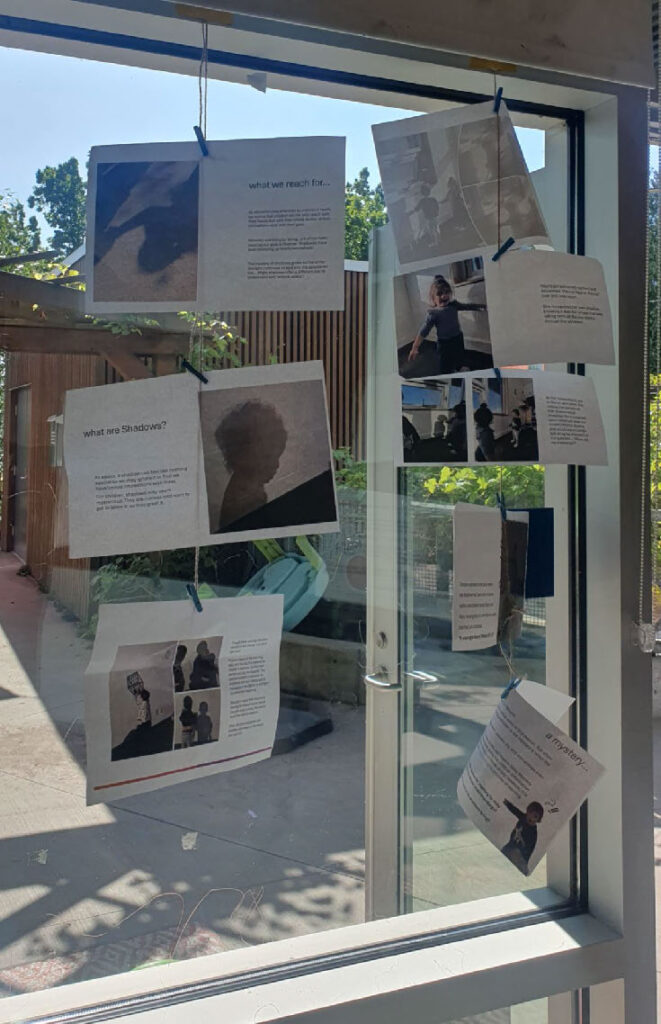 A few days after we hung the Shadow Pedagogical Narration near the window, Simone came close to me and said, “Mon Mon book.” (Simone calls herself Mon Mon).
At first, I thought she was asking to read a book, so I said, “Would you like to read a book?”
But Simone continued to say, “Mon Mon book,” as if she was trying to communicate something more specific to me. So I asked her, “Simone, can you show me where Mon Mon book is?” Then she pointed to the PN displayed by the window and said again,
“Mon Mon book.”
In that moment, my heart was singing.
As this is an infant group, I have often wondered how meaningful documentation really is for the children themselves. I have been thinking about how to make children’s learning more visible and how to create documentation that children can revisit through their own language, memory, and experience. I have also wondered how to make it more visually and aesthetically appealing, so it can invite children, families, and educators to come closer to the story.
At the same time, I still had a quiet question in my mind:
How much do children actually build a relationship with documentation? How much do they revisit it, recognize it, or connect with it?
Simone answered that question for me. By calling the Pedagogical Narration “Simone book,” she showed me that this documentation was not just something displayed on the wall. It had become something close to her. It carried a sense of relationship, bonding, and even ownership. It was not simply the educators' record of children’s learning. For Simone, it was her story. Her book. A visible trace of her experience.
I have noticed this with the Shadow Comic Poster as well. The children continue to bring it to us from time to time, asking us to look at it together or read it with them. These moments helped my doubts/wonderings slowly disappear.
This moment also helped me see PN and documentation in a more approachable way. Of course, I would like to reflect on this more deeply later, but I think I am beginning to see that documentation does not always need to feel complicated, formal, or far away from children’s daily lives. Simple photos, children’s words, symbols, signs, real materials, and loose parts that invite pretend or symbolic play (all related to their previous experiences) can become documentation from children’s point of view. They can point to it, name it, touch it, carry it, revisit it and reconnect with the memory of the experience.
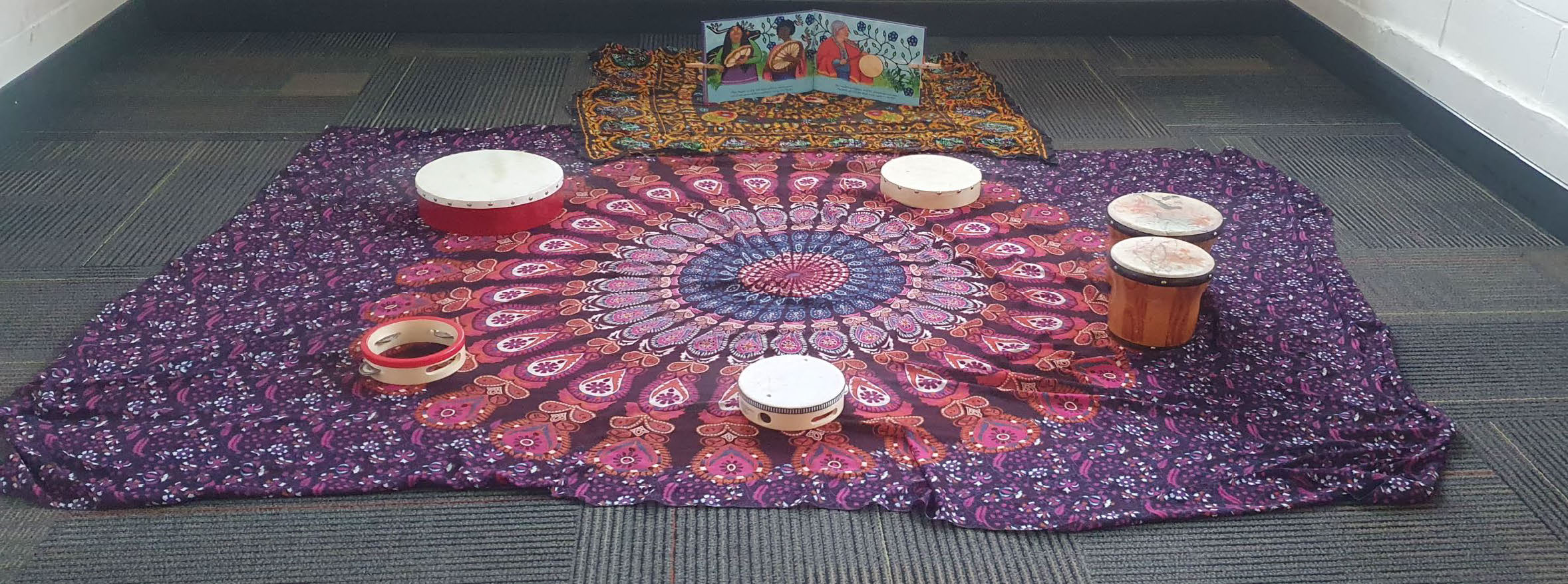
In that way, documentation can become a gentle doorway. It can invite children to return to their previous experiences, stay connected to their learning, and possibly open a pathway toward the next wondering, next conversation, or next play. Now I feel even more strongly that documentation can become a living part of children’s daily experiences. I want to pay closer attention to how documentation can feel warm, accessible, and connected to children’s real experiences, so it can become something they can return to, hold onto, and proudly recognize as their own.
Pedagogical narrations (PNs) come to life in the hands of the readers.
Narrations act as an "agentic force" that challenges existing knowledge, deconstructs ways of doing and thinking, and offers new ways of understanding experiences, concepts, and ideas. For children in the Seeds room, PNs come to life as a storied experience. As in this moment that Sojin reflects on, children come to see themselves through narrations and are further invited to create new meanings of the experiences and thoughts—building further understandings of their experience. To see oneself outside of their own point of view offers a unique way of meaning-making, where learning is not only internalized, but is publicly viewed, discussed, relived, and reinterpreted.
Instead of using the observational tool to observe the normal development of the child, [educators in Reggio Emilia] turned the tool around for it to speak the voice of the multiplicity of differences of children’s strategies and conceptualisations, and without any desire to categorise what it was they heard or seen. Giving voice to the child as a co-constructor of culture and knowledge was the main goal of their practices of pedagogical documentation; the second was to use it to further challenge children’s processes of learning.
(Dahlberg et al., 2007; Reggio Children, 2001; Rinaldi, 2006).
(Lenz-Taguchi, 2010, p. 72)
