
By Sherry, Maple Seeds Educator
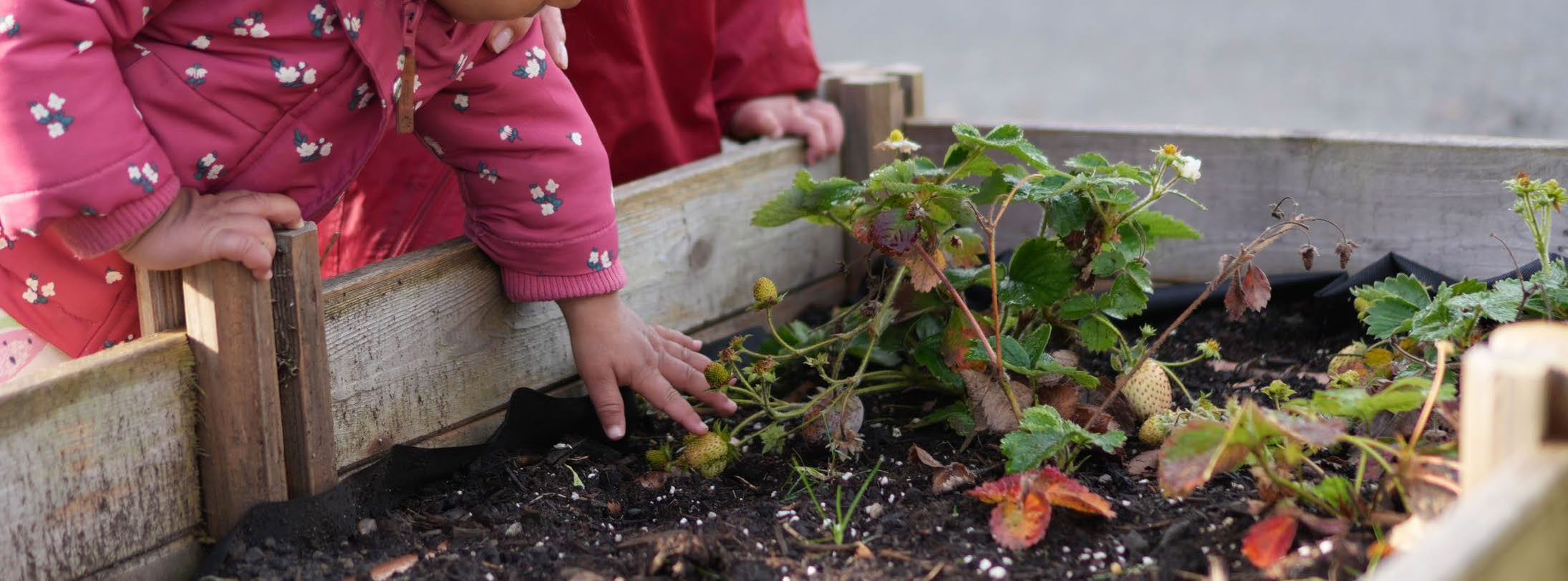
We usually have the water table set up in hot summer days. I noticed that when we have the water accessible, children start watering the plants that we planted together in one fine evening with the families. But, I also noticed that if there is no water set up, I have not seen any of them asking water for watering the plants.
And it makes me wonder…
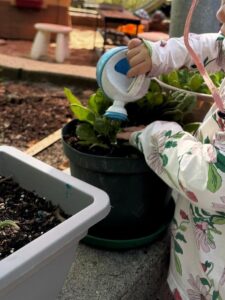
- Do children water the plants because they see how educators water them when we are outside together in the playground?
- Is it because we as educators invite the children to help us as we water them?
- Is it because they see how the plants grow and feel the need/want to take care of them themselves?
- Or it is just an automatic behaviour, another curiosity; another activity to engage in with the accessibility to water?
After sharing my observations with Leigh, she pointed out that I used the word "automatic" a couple times. When we use "automatic" to describe something, it usually means we do this without thinking it, it is “behaviour on autopilot” (NeuroLaunch, 2026).
Now this has me questioning, not only about what children are experiencing, but for myself as an educator.
Questions for us, adults…
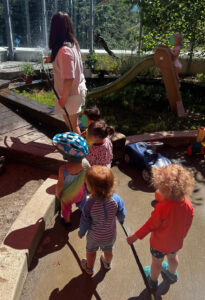
- When I spend time with children, am I truly aware of what is happening around me/us?
- Am I paying attention to what the children are paying attention to?
- Or am I just physically there and on autopilot mode when I interact with children?
- Do I forget to slow down with children when maybe the time they in Maple Seeds is the only time we are able to slow down in a day?
- What is my role as an educator in the daily tasks and routines, other than efficiently “completing” them?
- Life is busy, and considering the children's time in Maple Seeds may be the only time they get to slow down in a day, are we slowing down enough together?
- What might be forgotten when we get caught up in daily tasks and routines?