
Strange Shadow: Dancing alongside boundaries of self/other
Leigh (Pedagogy & Approach Support Educator)
In the unpredictable world that we step into with children, we have been trying to notice what seems strange. And in turn, to this unpredictable world, children respond with complicated questions and mysterious curiosities. Lately in the Sages room, there has been subtle attention to shadows as they have made us pause, and they have become rather unfamiliar or strange. We wish to bring you along the inquiry and exploration with this toddler group.
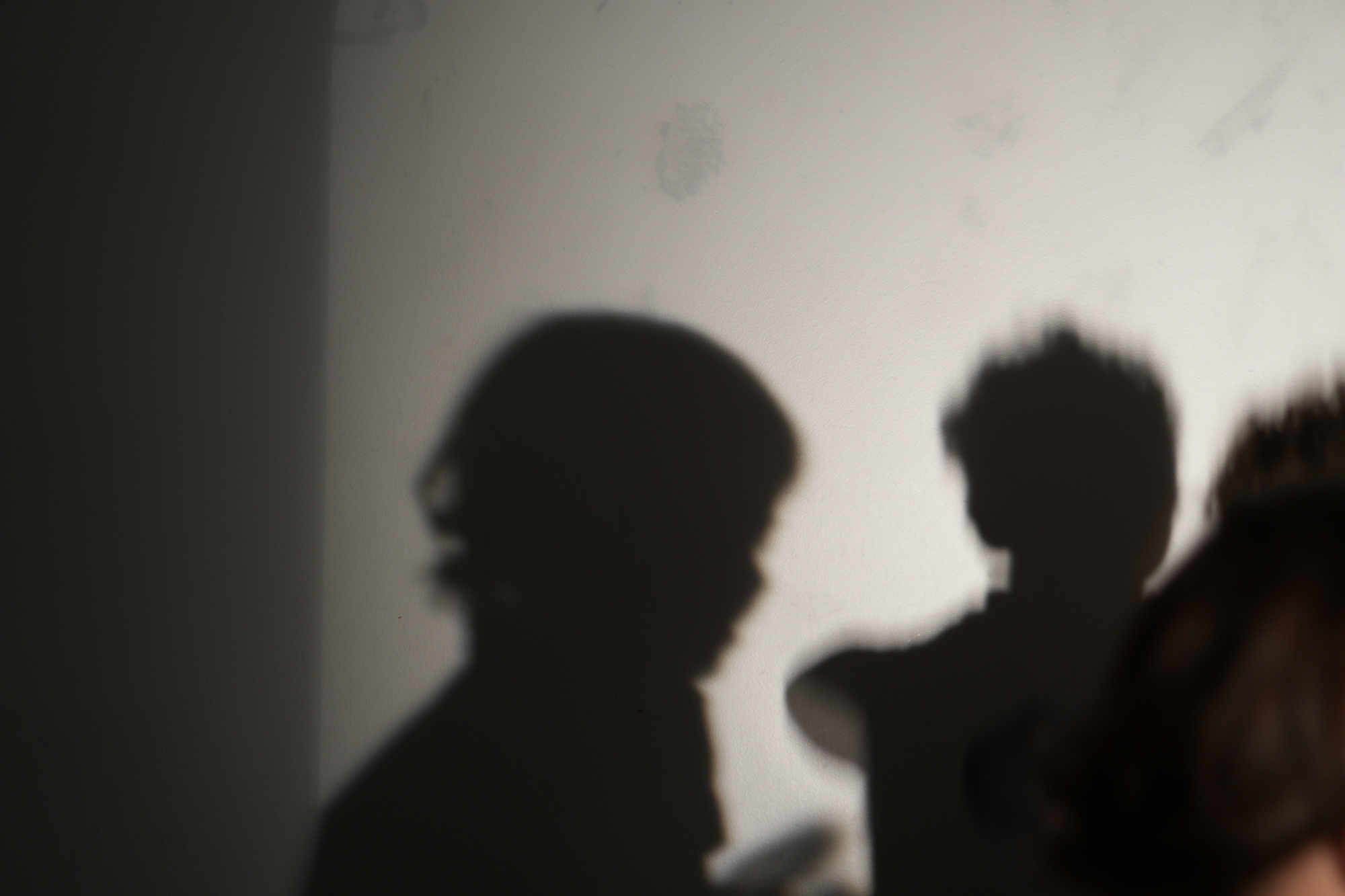
There were many moments where children have come to encounter shadows. We met shadows on our daily walks, played with dinosaur shadows, watched shadows growing on the wall, and even caught sleeping shadows as we woke up from our daily naps. Shadows have become more than an object of study that is merely understood through the science of light, but Shadow has become someone who lives with us and invites us into mystery and surprise.
We open here with a documentation composed by Ian, one of our brilliant educators in the Sages program, which illustrates a shared moment between children and Shadow. This glimpse into our current inquiry is then followed by an interpretation that draws out the pedagogical significance of this moment.
Dancing with Shadow
Documentation by Ian Kwok, Sages Educator
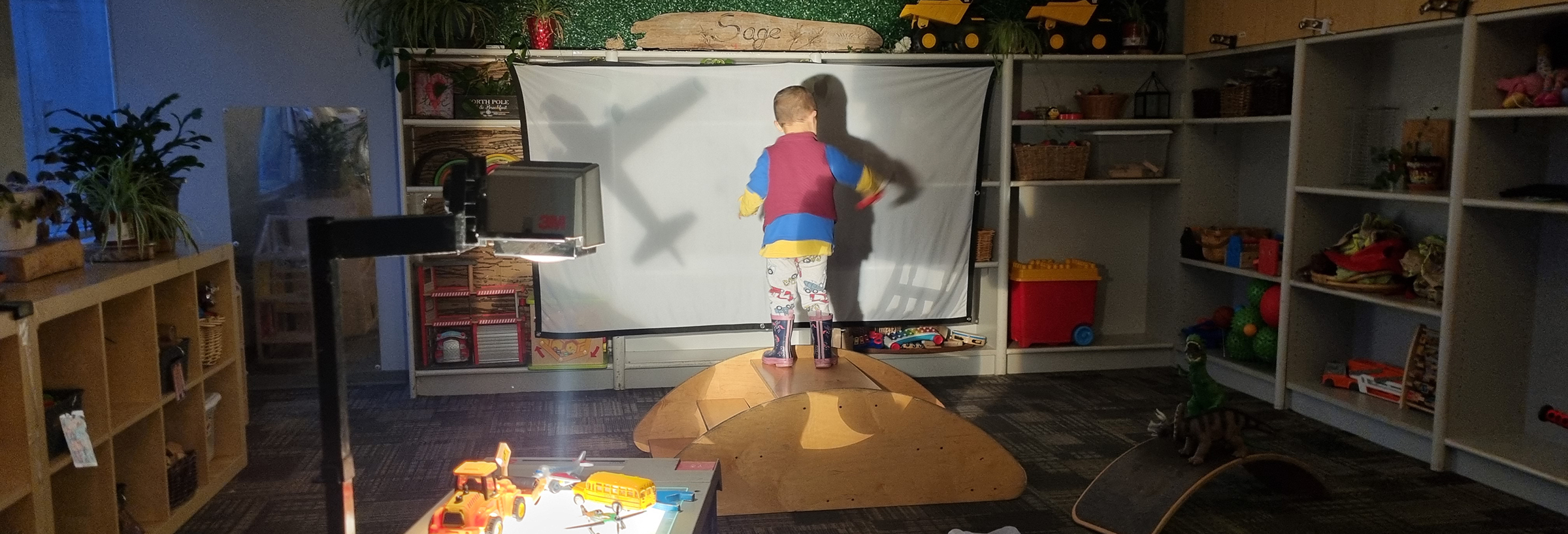
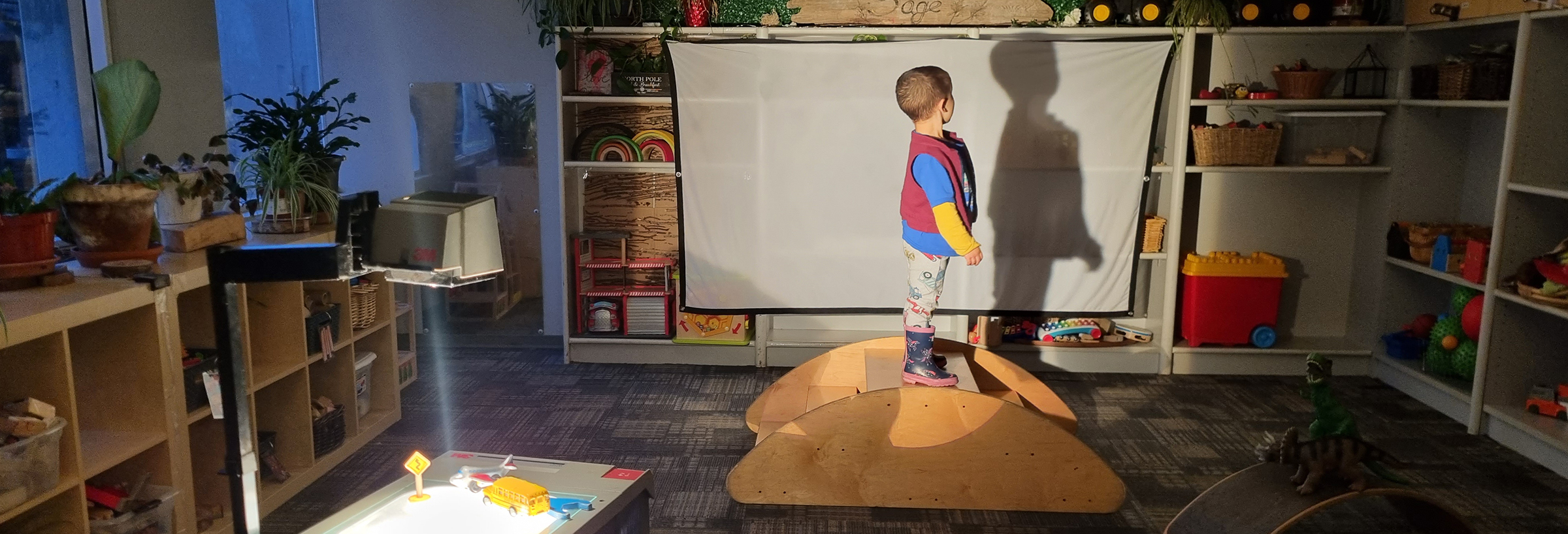
A soft glow from the overhead projector cast light across the white cloth, creating an inviting space where shadows quietly came to life. Niko followed his curiosity into a spontaneous exploration of movement, light, and self-awareness.
As he stepped into the illuminated area, he swayed his arms and exclaimed,
“Look Ian, I’m dancing with my shadow!”
His observation reflected more than excitement; it suggested an emerging awareness of representation that his body and its shadow were connected yet distinct. He experimented with exaggerated arm movements, seemingly testing how far his shadow could stretch and follow him.
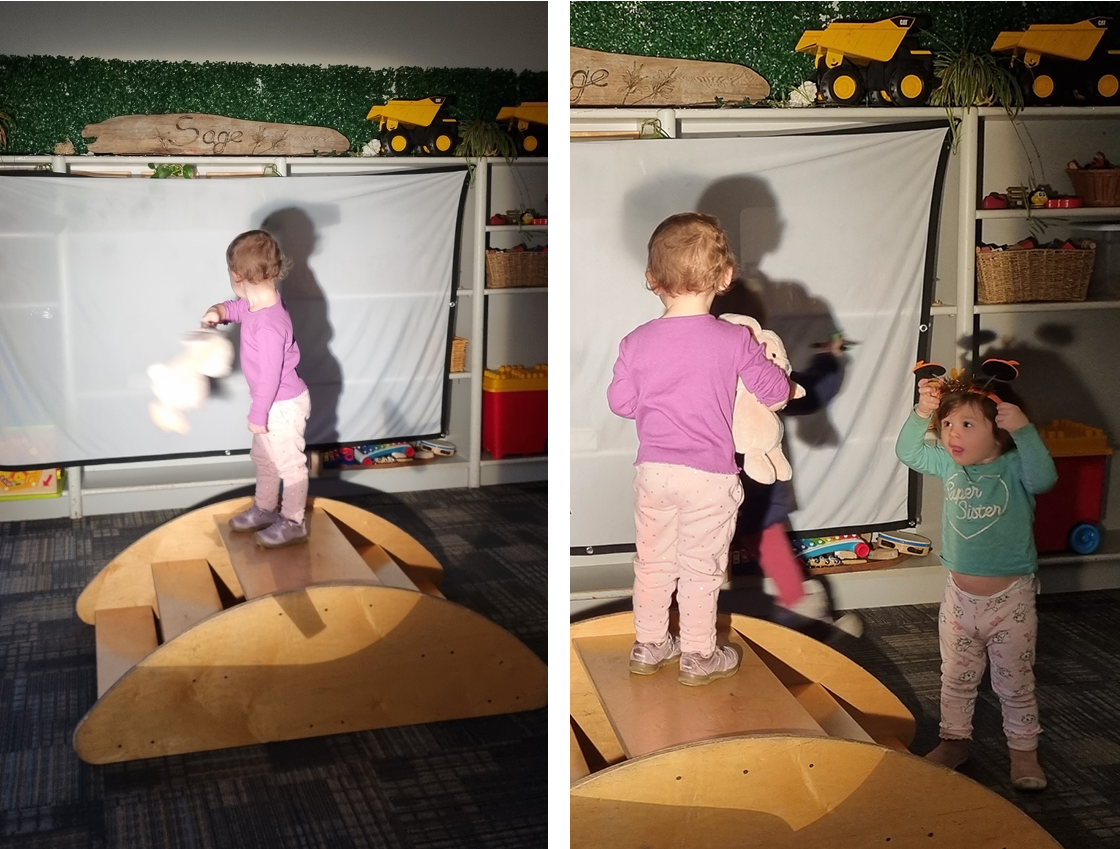
Emma took a turn on the stage too (left). Holding Bunna, she noticed, "My Bunna's shadow is dancing too! Look at this, Ian! Bunna's shadow is jumping!" As she tossed Bunna upward. Her language revealed a capacity to extend the experience beyond herself, adding animation and agency to Bunna's shadow too.
Emma's attention was not only on her own body but on the shared projection, highlighting the collective dimension of this experience how shadows could overlap, merge and separate.
Lulu quietly observed Niko and Emma. Then she suddenly picked up the pumpkin headband and positioned it on her head (right). As she looked at her shadow, she tilted her head slowly from side to side, studying the outline of her shadow's new shape. Lulu was investigating the transformation of her shadow, the now-altered contour of her projected self.